
Get Free Ebook The Wolving Time, by Patrick Jennings
Just hook up to the web to get this book The Wolving Time, By Patrick Jennings This is why we suggest you to make use of and make use of the industrialized technology. Checking out book doesn't indicate to bring the printed The Wolving Time, By Patrick Jennings Created modern technology has actually enabled you to read just the soft data of the book The Wolving Time, By Patrick Jennings It is same. You might not have to go as well as get traditionally in browsing guide The Wolving Time, By Patrick Jennings You may not have enough time to invest, may you? This is why we provide you the very best means to obtain guide The Wolving Time, By Patrick Jennings now!
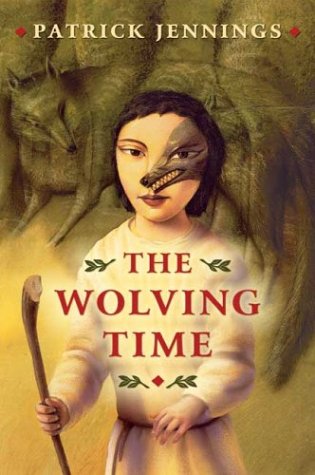
The Wolving Time, by Patrick Jennings

Get Free Ebook The Wolving Time, by Patrick Jennings
The Wolving Time, By Patrick Jennings. Satisfied reading! This is just what we really want to state to you which love reading so much. Just what regarding you that claim that reading are only commitment? Never ever mind, checking out habit ought to be begun with some particular factors. Among them is checking out by commitment. As just what we intend to provide here, the e-book entitled The Wolving Time, By Patrick Jennings is not sort of obligated e-book. You can appreciate this book The Wolving Time, By Patrick Jennings to review.
It can be among your early morning readings The Wolving Time, By Patrick Jennings This is a soft documents book that can be got by downloading from on-line publication. As known, in this innovative period, technology will alleviate you in doing some tasks. Also it is just reviewing the presence of book soft file of The Wolving Time, By Patrick Jennings can be added function to open. It is not only to open and also conserve in the gizmo. This time around in the morning and various other downtime are to review the book The Wolving Time, By Patrick Jennings
The book The Wolving Time, By Patrick Jennings will always provide you positive worth if you do it well. Finishing the book The Wolving Time, By Patrick Jennings to check out will not become the only objective. The objective is by obtaining the good worth from the book until the end of the book. This is why; you should learn even more while reading this The Wolving Time, By Patrick Jennings This is not only exactly how quick you check out a book as well as not only has how many you finished guides; it has to do with exactly what you have actually gotten from the books.
Taking into consideration guide The Wolving Time, By Patrick Jennings to read is likewise needed. You could choose the book based on the preferred styles that you such as. It will involve you to love checking out various other publications The Wolving Time, By Patrick Jennings It can be likewise regarding the requirement that obligates you to check out guide. As this The Wolving Time, By Patrick Jennings, you can discover it as your reading book, also your preferred reading book. So, find your preferred book here and also get the link to download and install guide soft documents.
A family of werewolves faces the human evil of persecution in this tense and spellbinding novel from one of Scholastic Press' favorite authors.
Laszlo Emberek is caught between two worlds: the bucolic life of a shepherd, tending his family's small flock of sheep with his beloved dog, Gizi, and the secret life of his parents, who can "change" into wolves at will. 13-yr-old Laszlo knows his change will come soon. But when his family's secret is discovered by a village girl -- a ward of the evil and corrupt priest, no less -- Laszlo must decide how he wants to live. Can he trust himself to remain compassionately human as other, wilder instincts overcome him? And are humans truly less dangerous than the wolves they hate with such passion?
- Sales Rank: #3985424 in Books
- Published on: 2003-10-01
- Original language: English
- Number of items: 1
- Dimensions: .81" h x 5.78" w x 8.32" l, .85 pounds
- Binding: Hardcover
- 208 pages
From School Library Journal
Grade 5-8-Near the end of the 16th century, Laszlo Emberek, 13, leads a seemingly idyllic life as a poor shepherd to his family's tiny flock in the French Pyrenees-at least until a wolf appears nearby. He whistles to signal his mother, who comes running, only to throw off her clothes, change into a wolf, and go romping off into the distance. That's right-Jennings spins this interesting historical yarn about a family of werewolves who make their living herding sheep. This tale is no comedy, though, but rather a compelling, thoughtful story. When Laszlo discovers that Muno, an orphaned Basque girl whose parents were executed as witches, has witnessed his mother's change, he worries that she won't keep the family's secret. Cultural, historical, and geographic details make for interesting reading. Also compelling is Laszlo's desire to come of age, to join his parents in making the change. His first journey to the village alone, his first change into a wolf, and his first experience of caring about another young person are all well rendered. Readers are likely to identify with the werewolf metaphor, which evokes the physical and emotional changes that adolescents experience. The exciting climax sees justice served, with Laszlo realizing the preciousness of life and his family secure with hopes for a new and safer life in a new village.
Joel Shoemaker, Southeast Junior High School, Iowa City, IA
Copyright � Reed Business Information, a division of Reed Elsevier Inc. All rights reserved.
From Booklist
Gr. 6-8. Outside a village in sixteenth-century France, Laszlo tends the sheep for his parents, werewolves Kalman and Rita. Though they have long lived in mortal fear that the cruel local priest will discover their dual nature or simply turn against them, they risk his disapproval and consequently their lives by taking in a young girl who runs away from his service. One of the pleasures of reading this cleanly written fantasy is how natural it seems when Laszlo's parents transform from human to wolf. Another is how gracefully the story folds this element of fantasy into a work of historical fiction. While the werewolf aspect of the story will appeal to many young people, and the scene in which Laszlo comes of age and makes his first transformation is memorable, the shapeshifters and the wolves are the innocents here. The character who represents evil wears the vestments of the established church. Call it irony or revisionist history, Jennings makes his case with dramatic and ethical clarity. Carolyn Phelan
Copyright � American Library Association. All rights reserved
Review
School Library Journal
(January 1, 2004; 0-439-39555-0)
Gr 5-8-Near the end of the 16th century, Laszlo Emberek, 13, leads a seemingly idyllic life as a poor shepherd to his family's tiny flock in the French Pyrenees-at least until a wolf appears nearby. He whistles to signal his mother, who comes running, only to throw off her clothes, change into a wolf, and go romping off into the distance. That's right-Jennings spins this interesting historical yarn about a family of werewolves who make their living herding sheep. This tale is no comedy, though, but rather a compelling, thoughtful story. When Laszlo discovers that Muno, an orphaned Basque girl whose parents were executed as witches, has witnessed his mother's change, he worries that she won't keep the family's secret. Cultural, historical, and geographic details make for interesting reading. Also compelling is Laszlo's desire to come of age, to join his parents in making the change. His first journey to the village alone, his first change into a wolf, and his first experience of caring about another young person are all well rendered. Readers are likely to identify with the werewolf metaphor, which evokes the physical and emotional changes that adolescents experience. The exciting climax sees justice served, with Laszlo realizing the preciousness of life and his family secure with hopes for a new and safer life in a new village.-Joel Shoemaker, Southeast Junior High School, Iowa City, IA Copyright 2004 Reed Business Information.
Publishers Weekly
(December 1, 2003; STARRED)
Jennings (Faith and the Electric Dogs; The Beastly Arms) demonstrates a superb diversity of style and characterization with this gripping tale of a family that can turn into wolves, set in 16th-century France. By choosing this era, the author probes the tenets of Christianity and the corruption of the church at a time when purported witches were burned at the stake. Born into a long line of shepherds, 13-year-old Lazlo lives with his family off by themselves, isolated from the townspeople, due to their foreign accent and ways. His mother and father possess an advantage in their vocation: they can transform into "loup-garou" (what the French called werewolves) to negotiate with wolves in the neighboring pack and protect their flock. When Muno, an orphan girl Lazlo's age, witnesses his mother's transformation while running away from her warden-the town's evil priest-Lazlo realizes that she knows the truth. Yet his desire for a friend impels him to conceal from his parents both Muno's knowledge of their secret and the growing hostility in the village toward them. Taking on the mindset of his characters, Jennings appeals to readers' senses, especially as Lazlo finally chooses to change into a wolf and "the softly fragrant forest... was now a place noisier and smellier than the village square." In contrast to the kindness and integrity of the natural wolves, the "loup-garou" and society's other outcasts, the priest and townspeople emerge as the bestial creatures. This page-turner delivers a fascinating commentary on what constitutes true goodness. Ages 12-up. (Oct.) Copyright 2003 Reed Business Information.
Voice of Youth Advocates
(December 1, 2003; 0-439-39555-0)
Laszlo's family members are shepherds in sixteenth-century France, living outside the town walls and attending town functions and church infrequently. Another trait that sets his family apart is their ability to change into wolves. Laszlo meets Muno, the priest's charge, as she is running away and witnesses Laszlo's mother changing. Laszlo is afraid that she will tell and the priest will persecute them, but as time passes and Muno does not, he becomes more afraid for the fate he realizes she will suffer living with the priest. In an exciting scene, the family escapes from the dungeons along with Muno and flees to the next township, but no
Most helpful customer reviews
0 of 0 people found the following review helpful.
Werewolves Are People, Too
By tvtv3
Laszlo Emberek is the son of a shepherd living in the countryside outside the rural village of Saint-Eustache, France in the late 1500s. Laszlo and his parents are something of outcasts because of their profession. They also have a secret which forces them to live a more secluded life: Lazlo's parents are werewolves and one day, Lazlo himself will be one, too. However, the Embereks aren't the blood-thirsty werewolves of tv an cinema. Instead, they are shapeshifters who are able to change into wolf form at will.
One day Laszlo discovers that a girl from Saint-Eustache has seen his mother change shape. The girl, Muno, stays with the parish priest and Laszlo become fearfully she will expose his family to Pere Raoul. He is able to catch the girl before she runs away and she reveals to him that she is running away. She agrees not to say anything about his family if he promises not to say anything about her running away. Thus, a bond is formed and gradually develops between the two. Yet, this is the Dark Ages and people are being burned and hung for being accused as witches. Pere Raoul doesn't trust the Emberecks and is determined to bring them to justice.
THE WOLVING TIME isn't a great novel. However, it's not terrible, either. The author does a good job of describing things. The characterization of the characters is also well done. I also enjoyed that the werewolves in the story weren't blood-thirsty monsters, but were just people with the ability to change shape. Lastly, the book also does a decent job of keeping the setting and the details of the story realistic; this is a story that has been researched and not just made up.
However, I was disappointed that the villain in the story is a Catholic priest. That is a clich� that is overused far too often. I also felt that the ending of the book was a little rushed. The suspense in the story gradually builds, but when the climax arrives, it fizzles rather than explodes.
Overall, THE WOLVING TIME is a decent story with some extremely well-told details, good characterization, and some interesting historical background. It also offers a twist on the werewolf story that is interesting.
3 of 3 people found the following review helpful.
The Wolving Time
By J. Son
This book is about Laszlo Emberek, a boy who is in two worlds: one in the world as a human, another one is as a wolf; yes, a wolf. His parents, Kalman and Rita, both husband and wife, are already wolves; so far his parents say that he isn't ready to become a wolf yet. Unfortunately, one day a girl named Muno sees his parents change forms while she plans to run away from the priest, Pre Raoul, for she was his servant after he killed her parents and everythings she had. One day she is kept in jail, forced to say that Laszlo were werewolves, thanks to the priest; but luckily she doesn't. However, the priest and the villagers still find them and traps them. As they escape, Kalman and Rita tell him that he is ready - ready to become a wolf. He accepts, and in the end they were able to free Muno and move to a different, friendlier, place.
I liked this book because it was so intense. One minute you are all safe and happy, the next minute you are under pressure. The author is very descriptive, when he describes Laszlo when he becomes a wolf. As it says it the book, " He ducked his head between his forelegs and saw a furry brisket and silvery hind legs and, swishing back and forth behind them, a bushy tail!" In my opinion, it feels as if you are a wolf yourself, and usually things like that, that you can truly feel, are rare.
The book also talks about some very sad yet wise things. When Muno tells Laszlo that she is kept alive while everyone else she had was dead, it was because the priest knew that he couldn't take anything more from her. The only way was to keep her in torture, but alive. For what she wanted was to escape him, and the priest knew that. It is very descriptive, as I had said before.
Another quote from the book was when the village boys first discovered that he was a werewolf, " His ferocity surprised them - and him - and he worried again that he might change." It shows that he is afraid, which is another why I like this book. Despite all things, even if you became something else or someone else is the fact that you will always have fear follow you. In a way I also disliked the book because the plot was too slow. They didn't tell the part of the boy changing till practically the end of the book. Till then, the person seemed to add things to keep the audience waiting.
My least favorite part of the book was when Muno came to become trapped in the dungeon. It irritates me, not knowing what is going on. All of the excitement seems to be holding in you, yet it won't let go. Plus, the author kept her in the dungeon too long. Till she was freed all they ever talked about was where she was, and suspicious eyes lurking around.
4 of 6 people found the following review helpful.
I wanted this to be a 5-star book, but ...
By Steven Crane
why is it always the church that puts the "evil" in "medieval"? Why must the villain always be a corrupt priest?
To Mr. Jennings' credit, Laszlo and his parents are nominally Christian, and the next parish over has a sympathetic priest. In general, though, one gets the impression that all would be right in France if only the church and the nobles were out of the way.
They tried that a few centuries after _The Wolving Time_. It was called the Reign of Terror.
The best parts of this book are the portrayals of Laszlo and his parents Kalman and Rita, as individual characters and as a family. These scenes are filled with love, gentle laughter, and compassion. I only wish Mr. Jennings had made Pere Raoul (the evil priest) as human as the Emberek family. As it is, he is a caricature, easily dismissed as a "them" by enlightened people like us.
"If only it were all so simple! If only there were evil people somewhere committing evil deeds, and it were necessary only to separate them from the rest of us and destroy them. But the line dividing good and evil cuts through the heart of every human being. And who is willing to destroy a piece of his own heart?" -- Aleksandr Solzhenitsyn
The Wolving Time, by Patrick Jennings PDF
The Wolving Time, by Patrick Jennings EPub
The Wolving Time, by Patrick Jennings Doc
The Wolving Time, by Patrick Jennings iBooks
The Wolving Time, by Patrick Jennings rtf
The Wolving Time, by Patrick Jennings Mobipocket
The Wolving Time, by Patrick Jennings Kindle
0 komentar:
Posting Komentar